Snarkitecture is coming to DC.
This July, National Building Museum welcomes back Snarkitecture with a new summer installation called THE PLAYGROUND. Known for work that exists somewhere between art, architecture, and public experience, the studio continues to push the conversation around what architecture can be.
A Studio Between Art and Architecture
Snarkitecture was founded in New York in 2008 by artist Daniel Arsham and architect/designer Alex Mustonen. The studio describes its work as being dedicated to “reimagining the familiar,” creating memorable spaces, experiences, and objects across cultural, commercial, and private projects.
That idea shows up clearly in their installations. A beach becomes an indoor environment. A house becomes a sequence of surreal rooms. The work often sits somewhere between architecture, art, design, and performance. It is not always about making a building. Sometimes it is about making people notice space differently.
Not a Building, Still Architecture
Snarkitecture’s installations are usually temporary. They are not buildings in the traditional sense, but they still operate architecturally.
They shape how people move, gather, pause, and interact. Through scale, repetition, material, and atmosphere, the studio creates experiences that make people notice space differently.
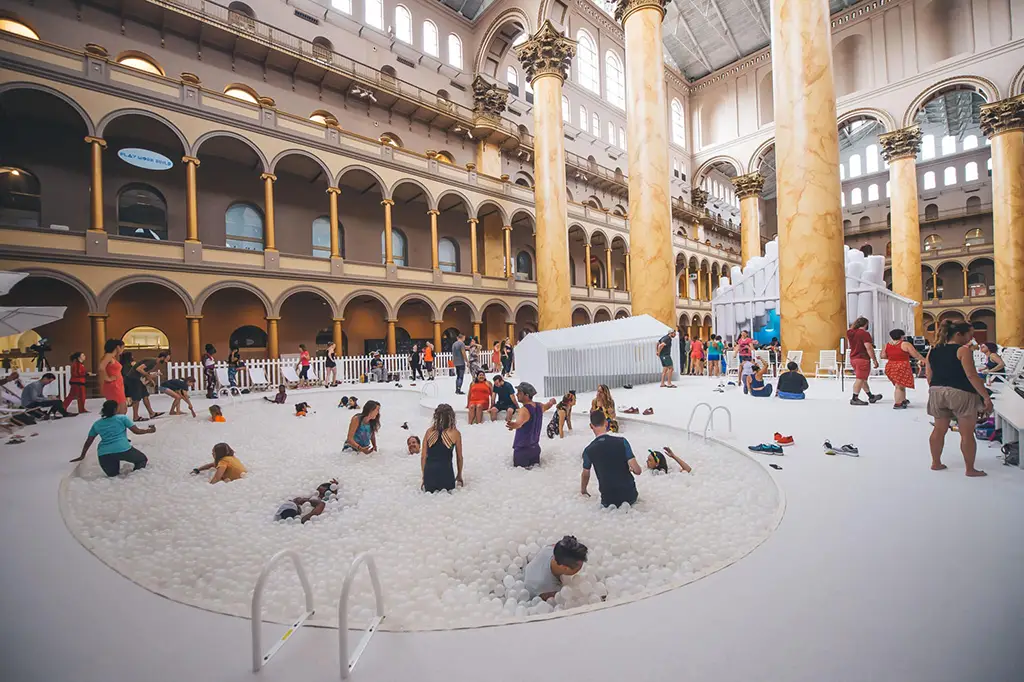
That idea was clear in projects like The BEACH in 2015, which filled the museum’s Great Hall with nearly one million recyclable plastic balls, and Fun House in 2018, which turned the idea of a home into a surreal sequence of interactive rooms.
These installations stay with people because they are more than visual spectacles. They become shared experiences. People remember who they were with, how the space felt, and what the environment encouraged them to do.
Why People Remember These Installations
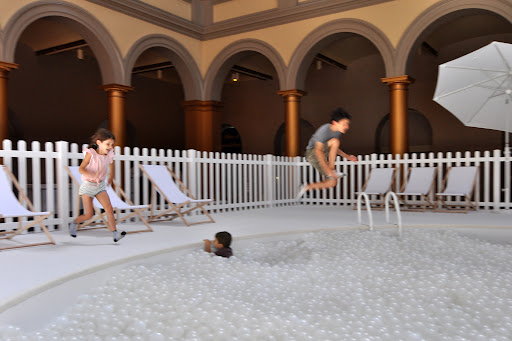
In 2015, the studio created The BEACH at the National Building Museum, transforming the Great Hall into a 10,000-square-foot indoor shoreline filled with nearly one million recyclable translucent plastic balls. The installation turned a monumental museum space into something playful, public, and unexpected.
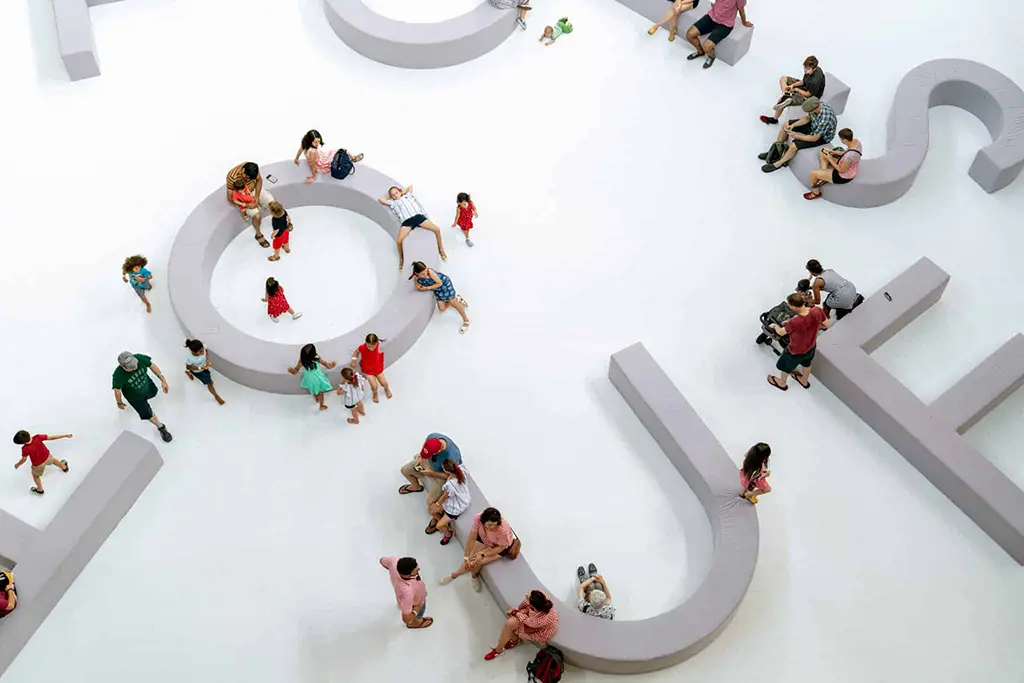
In 2018, Snarkitecture returned with Fun House, its first comprehensive museum exhibition. Installed at the National Building Museum, the project reimagined the idea of a traditional home through a freestanding house and a sequence of interactive rooms and objects.
These projects are memorable because they are simple enough to understand immediately, but spatial enough to stay with you. A white indoor beach. A surreal house. A museum hall turned into an environment people can enter, touch, photograph, and move through.
There is a reason these installations travel so well through culture. They are visual, but they are not only visual. They are social spaces. People experience them together. They become shared moments, not just exhibitions.
That matters because architecture is often remembered the same way. Not only by what it looks like, but by what happened there. How it felt to walk through it. Who you were with. What the space made possible.
What Traditional Architecture Can Take From This
Snarkitecture’s return to DC is not just a museum event. It is also a useful reminder for anyone who works with the built environment.
Traditional architecture has to solve real and lasting needs. It has to consider structure, code, budget, performance, accessibility, maintenance, and long-term use. That work matters. But Snarkitecture shows how powerful the experiential side of space can be.
People remember spaces that make them feel something. They remember moments of surprise, clarity, play, scale, comfort, and curiosity. Those qualities do not only belong in museums or temporary installations. They can also inform how we think about schools, civic buildings, transit spaces, workplaces, and public environments.
share this story:
