The Ripple Effect of Infrastructure Investment
When infrastructure projects are announced, most of the attention focuses on what is being built.
A new rail line. A port expansion. A highway improvement. An airport modernization.
What receives less attention is what happens after construction is complete.
What the Luzon Economic Corridor Reveals About Long-Term Economic Growth
History has shown that infrastructure investments often influence far more than mobility. They can shape where businesses locate, where people choose to live, how communities grow, and how regions compete economically. In many cases, the project itself becomes only the first chapter of a much larger story.
The recently announced Luzon Economic Corridor in the Philippines provides an opportunity to examine this relationship between infrastructure and long-term economic development.
Infrastructure as an Economic Multiplier
Economists have long studied the relationship between infrastructure investment and economic growth.
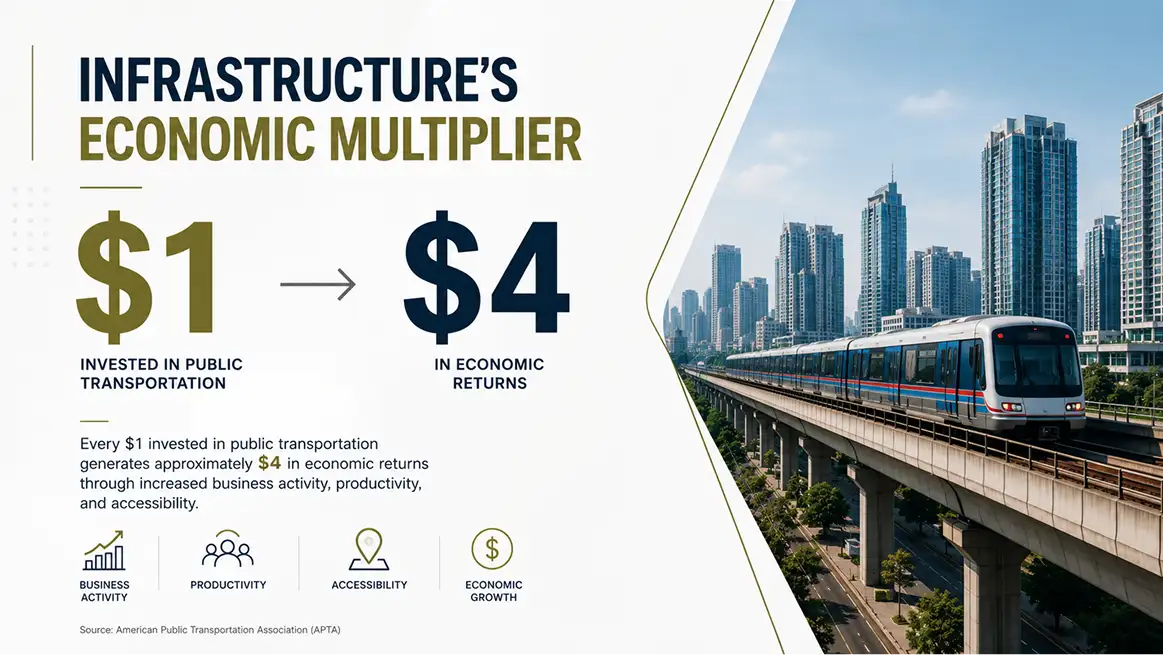
According to the American Public Transportation Association, every $1 invested in public transportation can generate approximately $4 in economic returns through increased productivity, business activity, and improved accessibility.
The World Bank has similarly identified transportation infrastructure as a critical driver of economic competitiveness, particularly in developing regions where connectivity can directly influence trade, labor mobility, and investment decisions.
The relationship is often described as a multiplier effect.
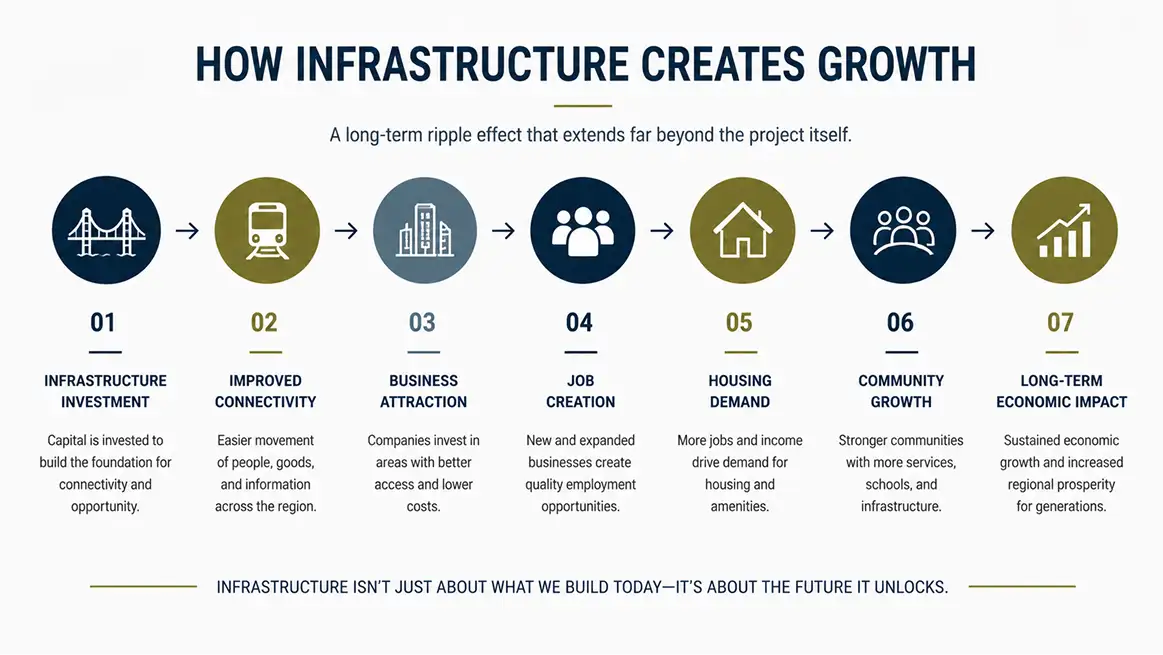
Infrastructure improves access.
Improved access attracts investment.
Investment creates jobs.
Jobs create demand for housing, services, education, healthcare, and commercial development.
Over time, these effects compound across an entire region.
The project itself may last several years. Its economic impact can last for decades.
Evidence From Existing Transit Investments
The effects of infrastructure investment can be observed in communities around the world.
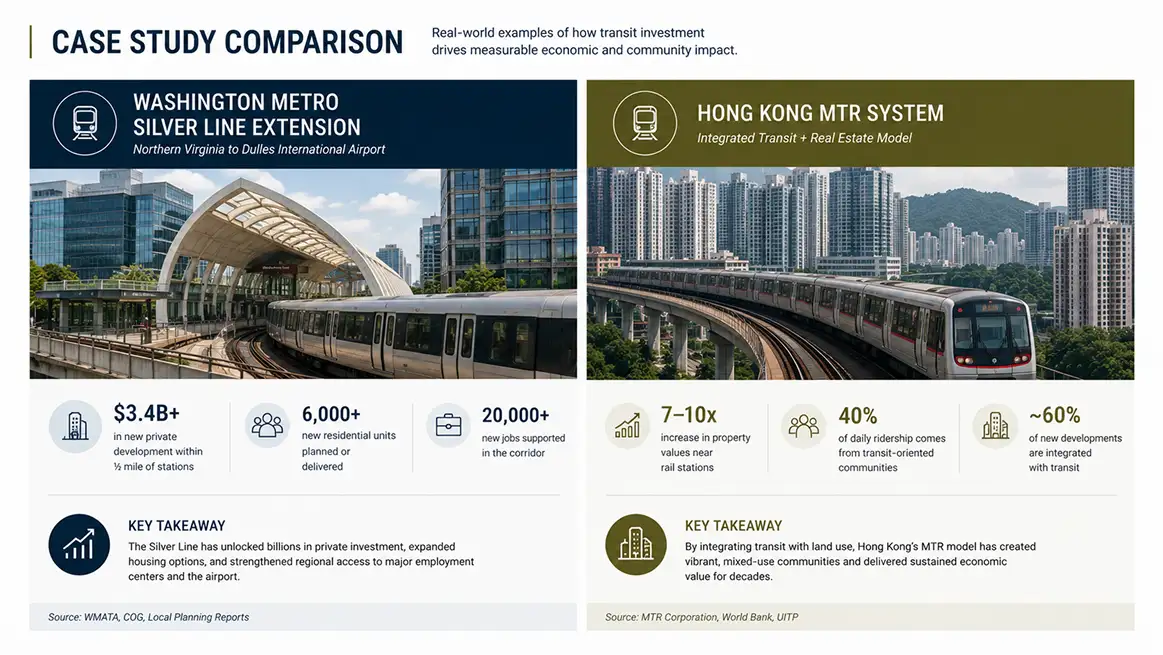
In the Washington metropolitan region, transit-oriented development surrounding Metro stations has generated billions of dollars in private investment over multiple decades.
The Silver Line extension, for example, has supported significant residential and commercial growth while improving regional access to major employment centers and Dulles International Airport.
The pattern is not unique to the United States.
Hong Kong’s rail network has become a globally recognized example of infrastructure-driven development, with transit investments helping shape dense mixed-use communities that integrate transportation, housing, retail, and employment opportunities.
While every region has unique economic conditions, a common trend emerges:
Connectivity creates opportunity.
Opportunity attracts investment.
Investment drives growth.
The Luzon Economic Corridor
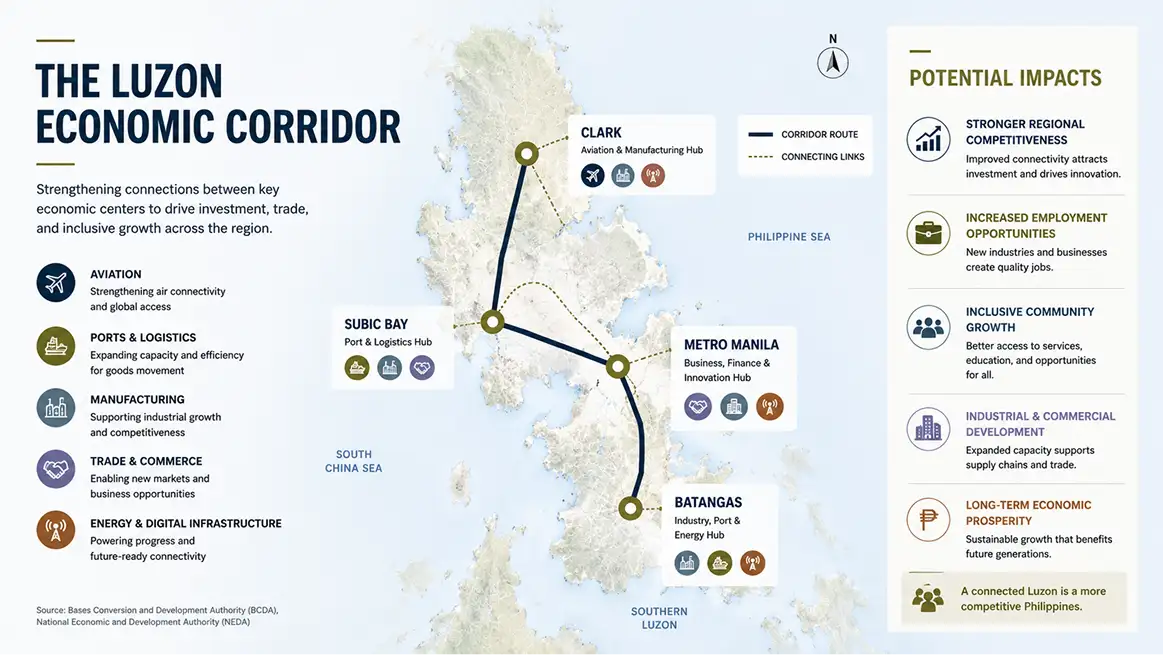
The Luzon Economic Corridor seeks to strengthen connections between several of the Philippines’ most important economic centers, including Metro Manila, Clark, Subic Bay, and Batangas.
The initiative focuses on transportation, logistics, energy, and digital infrastructure with the goal of improving economic connectivity throughout the region.
Taken together, these investments have the potential to improve the movement of goods, strengthen supply chains, attract domestic and foreign investment, and support future industrial development.
The corridor is ultimately about more than transportation.
It is about creating the conditions necessary for long-term economic growth.
While the full impact will unfold over many years, similar infrastructure investments around the world suggest that improved connectivity often serves as a catalyst for broader economic transformation.
Measuring Success Beyond Construction
Infrastructure projects are typically measured by budgets, schedules, and technical performance.
Those metrics are important.
But the most meaningful outcomes often emerge long after ribbon cuttings and project closeouts.
How many businesses were created?
How many jobs were supported?
How many residents gained access to new opportunities?
How many communities experienced long-term growth?
These are the questions that ultimately determine whether an infrastructure investment achieved its intended purpose.
Building for Long-Term Value
At LT, we believe successful infrastructure is measured not only by what is built, but by what becomes possible because it was built.
Whether designing transportation facilities, educational campuses, commercial developments, or civic infrastructure, every project contributes to a larger ecosystem of growth and opportunity.
Communities are shaped by the investments made today.
The most impactful projects are those that continue creating value long after construction is complete.
share this story:
