How the Luzon Economic Corridor Could Reshape the Philippine Economy
For decades, the Philippines has had many of the indgredients needed for economic growth: a young workforce, a strategic location in Southeast Asia, abundant natural resources, and access to some of the world’s busiest trade routes.
Yet much of that potential remains fragmented.
Major economic centers across Luzon have developed independently rather than as a connected system. Manufacturing, logistics, technology, and trade hubs often operate in separate spheres, limiting the country’s ability to compete with larger regional economies.
The Luzon Economic Corridor aims to change that.
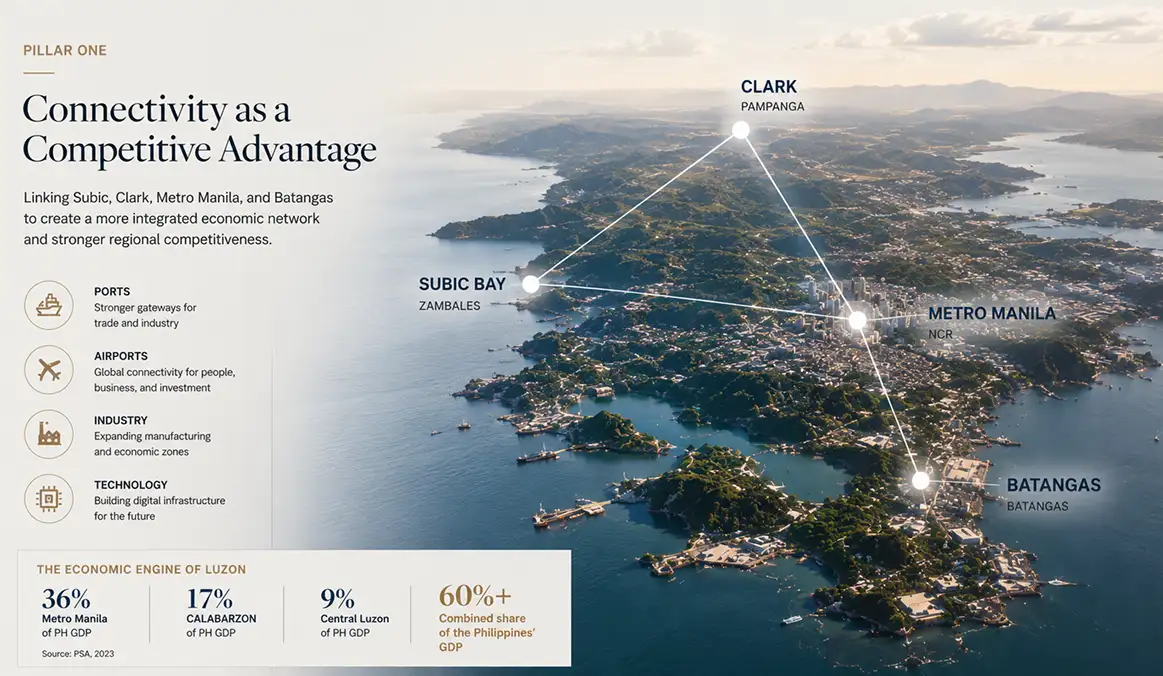
Announced through a partnership between the Philippines, the United States, and Japan, the Luzon Economic Corridor (LEC) aims to strengthen the connections between Subic, Clark, Metro Manila, and Batangas. This effort would connect ports, airports, industrial zones, and business centers and turn them into a coordinated engine for growth.
If successful, it could help attract new industries, strengthen supply chains, create jobs, and position the Philippines as a larger player in the future of manufacturing, technology, and regional trade.
Connectivity as a Competitive Advantage
The first pillar of the corridor is connectivity.
Subic, Clark, Metro Manila, and Batangas are already among the country’s most important economic centers. Together, the regions around the corridor account for well over half of the Philippines’ economic output. Yet many of these hubs still operate independently, creating inefficiencies in how people, goods, and services move throughout the region.
By improving transportation, logistics, energy, and digital infrastructure, the corridor seeks to create a more integrated economic network. The goal is not simply to move goods faster. It is to make Luzon a more attractive place to do business.

Building the Industries of Tomorrow
Infrastructure is the foundation, but industry is the destination.
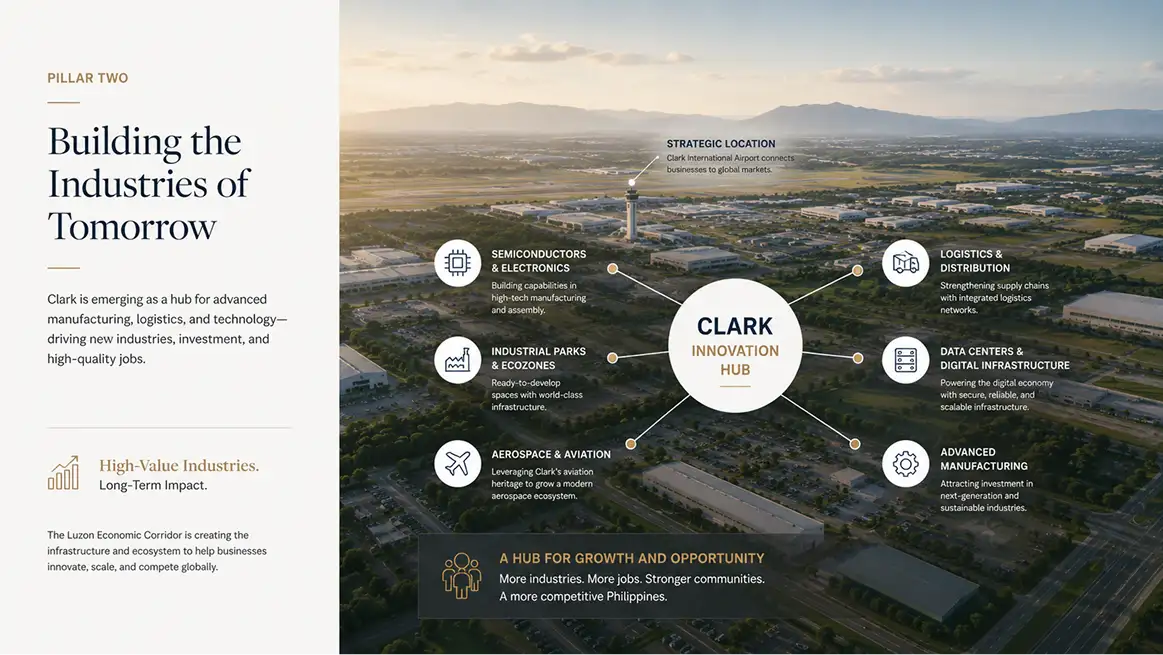
Clark has emerged as a focal point for future growth, with ambitions to attract advanced manufacturing, semiconductor production, electronics, logistics, data centers, and aviation-related industries. As global companies look to diversify supply chains and expand operations across Southeast Asia, the Philippines has an opportunity to capture new investment.
The corridor is designed to help make that possible. Better infrastructure creates the conditions for businesses to expand, manufacturers to scale, and new industries to establish long-term roots.
For a country seeking to grow beyond traditional economic models, that could be one of the corridor’s most significant impacts.
A Strategic Moment for the Philippines
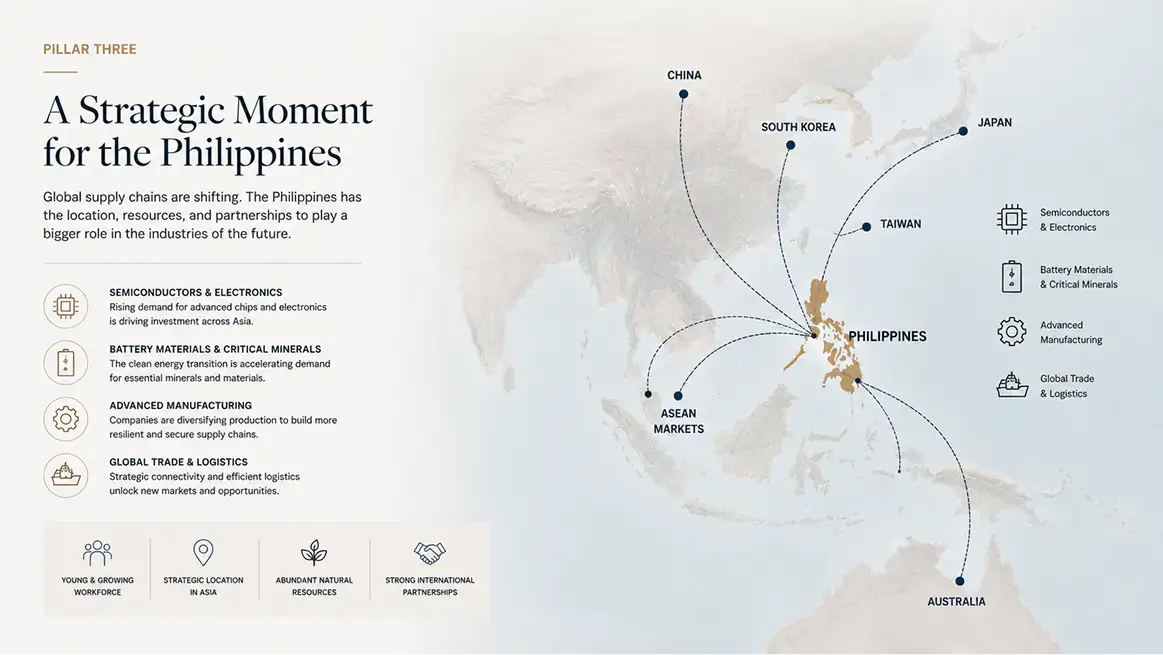
The Luzon Economic Corridor arrives at a time when global supply chains are rapidly evolving.
Demand for semiconductors, clean energy technologies, advanced electronics, and critical minerals continues to rise. At the same time, governments and businesses are seeking new manufacturing and investment destinations throughout the Indo-Pacific.
The Philippines is well positioned to benefit from these shifts. With a growing workforce, strategic location, and significant natural resources, the country has many of the ingredients needed for long-term growth. The corridor provides an opportunity to connect those advantages with the infrastructure and investment needed to fully unlock them.
Looking Beyond the Infrastructure
The most successful infrastructure projects are rarely remembered for the roads, rail lines, or facilities they create.
They are remembered for the opportunities they unlock.
The Luzon Economic Corridor represents more than a transportation initiative. It is a long-term investment in the competitiveness of the Philippine economy and a vision for how future growth can be distributed across the region.
The full impact will take years to unfold. But if the corridor achieves its goals, it could help shape the next chapter of economic development in the Philippines, creating new opportunities for businesses, communities, and future generations.
share this story:
