The Design Strategy Behind Prince George's Blueprint Schools
There’s a long-standing tendency in architecture to celebrate the one-off. The custom building. The signature design. The project tailored entirely to a single site or client.
But some of the most important work happening in public infrastructure today is asking a different question: what happens when we stop designing every school from scratch?
Prince George’s County Public Schools is exploring that answer through its Blueprint School Program, an initiative focused on accelerating school delivery through prototype-based design. As structural engineers contributing to multiple Blueprint projects across both Phase 1 and Phase 2 of the program, we’ve seen firsthand how repetition, when done thoughtfully, can become a design advantage rather than a limitation
About the Blueprint Program
PGCPS serves over 130,000 students across one of the largest and most diverse school districts in Maryland. The district faces a challenge shared by public school systems across the country: aging facilities, growing enrollment in some areas, and capital budgets that don’t stretch far enough to give every community a custom-designed building from scratch. The Blueprint School Program is the district’s answer to that math.
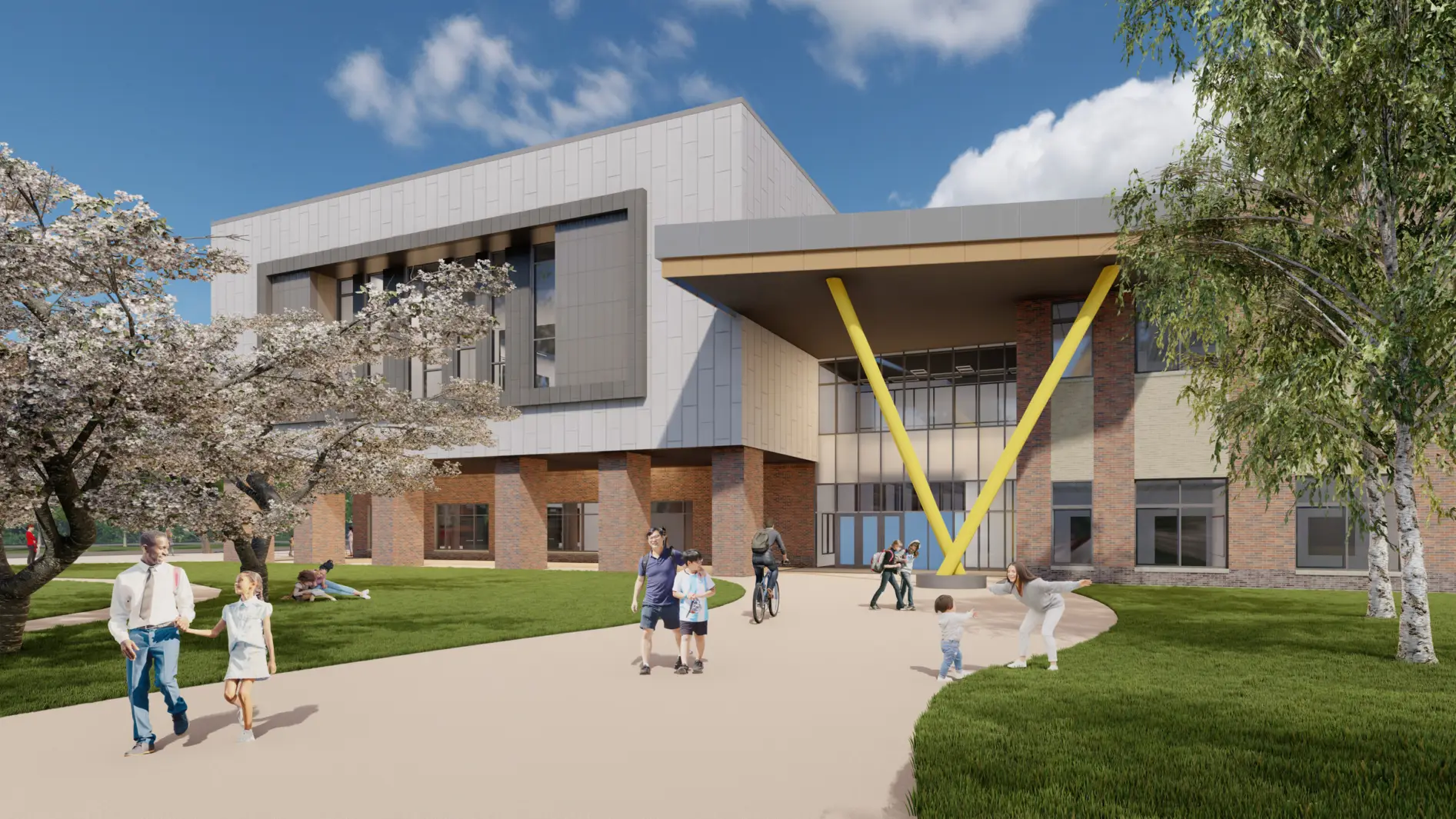
Rather than designing each new school as a standalone project, PGCPS developed a set of standardized prototype designs that can be adapted to different sites, enrollment sizes, and community needs. Think of it as a design template with built-in flexibility. The structural system, the core layout, and the major building systems stay consistent from project to project. But the site adaptation, the orientation, the facade treatments, and the community-facing elements shift to respond to where the building actually sits.
Solving the Timeline Problem
Traditional delivery methods often require teams to restart the design and coordination process with every new facility. Even when schools serve similar enrollment needs, the engineering effort frequently begins from zero. That creates longer schedules, more coordination variables, and greater construction uncertainty.
The Blueprint model changes that dynamic.
By standardizing key building systems and repeating proven prototype strategies, project teams can reduce portions of the design timeline, improve constructability, and carry lessons learned directly into the next project.
As we’ve worked in Phase 2 for Brandywine, Robert Frost, and Hyattsville, we’ve seen how repetition creates institutional knowledge. Structural systems that have already been coordinated and constructed become easier to refine. Connection details improve. Construction teams become more familiar with the systems being deployed. The focus shifts away from re-solving the basics and toward adapting the building intelligently to each site.
The goal is not to create identical schools. It is to create a smarter framework for delivering them.
The Benefits Beyond Efficiency
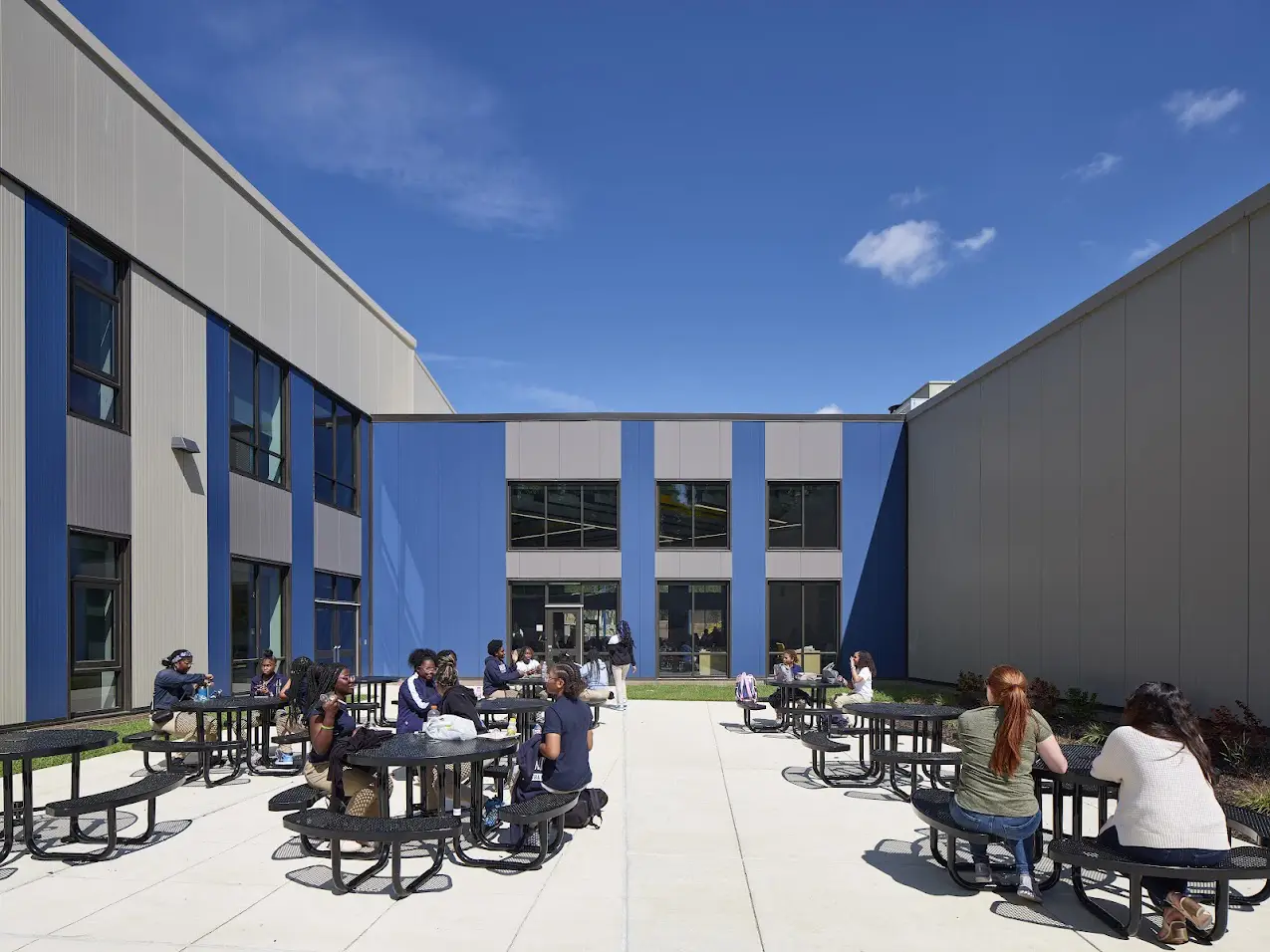
The most visible advantage of prototype-based delivery is speed. Faster delivery timelines mean students and educators can move into newer facilities sooner, reducing the amount of time communities spend relying on aging infrastructure.
But the long-term benefits extend beyond schedule compression.
Repeated implementation also improves quality. As project teams move from one Blueprint school to the next, coordination becomes more streamlined and construction teams become increasingly familiar with the systems being deployed.
There is also a financial benefit. Standardized systems can help districts stretch limited capital improvement budgets further by reducing redesign effort and improving construction predictability across multiple projects.

Innovation Inside the Template
One of the misconceptions about prototype-based design is that it kills innovation. From the inside, the opposite is true.
The template handles the solved problems so that the design team can focus energy on the unsolved ones. On the Blueprint projects, that means the structural prototype frees up bandwidth to think about things like resilience, sustainability, and long-term adaptability.
How do you design a school structure that can accommodate future program changes without major renovation? How do you integrate sustainable systems (green roofs, enhanced daylighting, geothermal-ready foundations) into a standardized frame? These aren’t questions you get to spend time on when every project starts from a blank sheet and burns half the schedule just establishing the basics. The prototype gives you a head start. What you do with that head start is where the real design thinking lives.
Repetition as a Design Act
Prototype-based schools are sometimes framed as a compromise. But the Blueprint Program suggests something different.
It represents a deliberate decision to prioritize delivery, consistency, and long-term community impact at scale. It acknowledges that good design is not always about reinvention. Sometimes it is about refinement.
For students, that means access to healthier, more modern learning environments sooner. For project teams, it creates an opportunity to continuously improve systems through repetition and experience.
That’s not repetition for the sake of efficiency alone. It’s iteration in service of better outcomes.
share this story:
